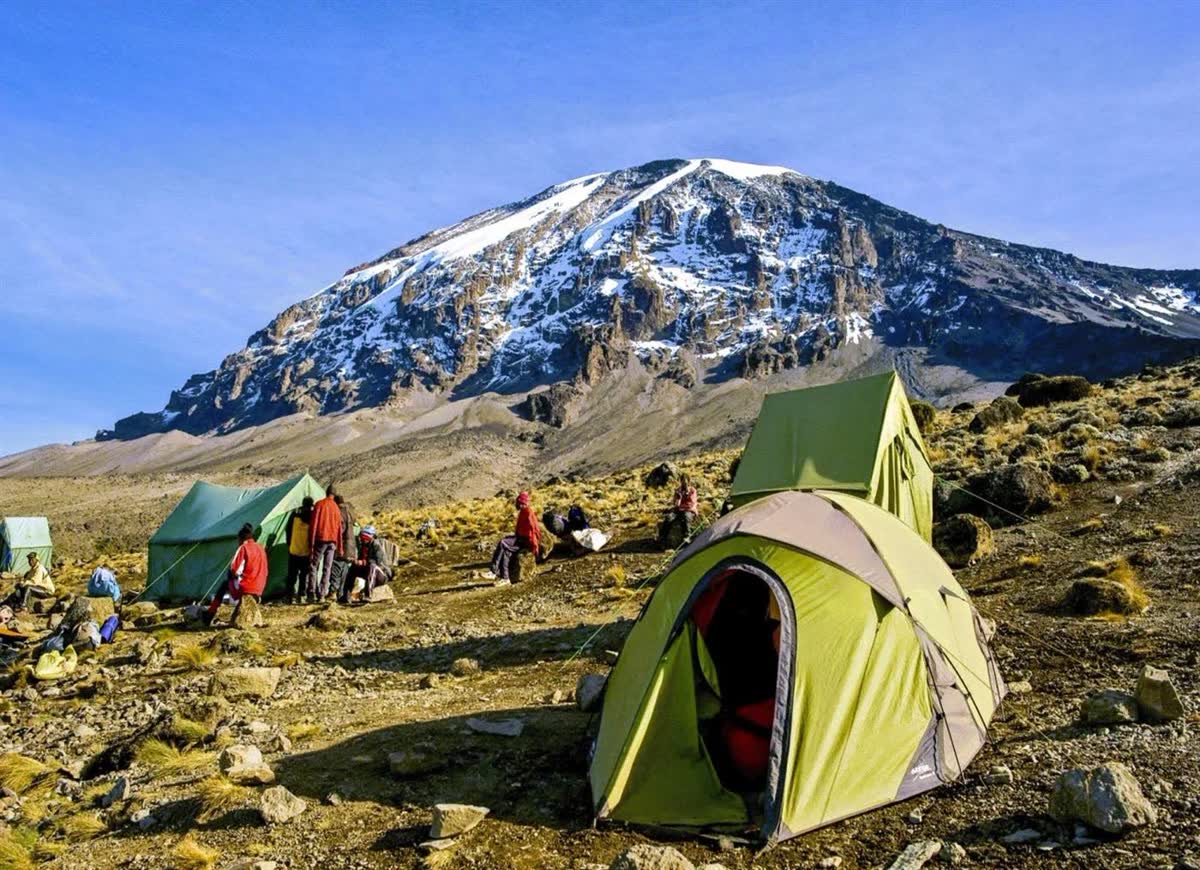
Kilimanjaro can technically be climbed year-round, but two dry-season windows offer the clearest skies and easiest trail conditions.
Kilimanjaro sits close enough to the equator that temperature varies far more with altitude than with month — but rainfall changes considerably across the year, and that's what actually shapes the best climbing windows.
A shorter, less crowded dry window, often colder at altitude with more chance of snow on the summit — a good choice for trekkers wanting quieter trails.
Kilimanjaro's most popular and most reliable dry season, with the clearest skies and best trail conditions — also the busiest months on the mountain, especially July-August.
April-May (long rains) and November (short rains) bring wetter trails and reduced visibility. Climbing isn't impossible, but conditions are considerably tougher, particularly on southern routes.
The Rongai route's northern position keeps it drier during the rainy seasons, making it a sensible choice if your travel dates fall outside the two main dry windows.
Tell us your preferred route, dates and group size and our local mountain team will build your climb.
Get Your Free Quote